
Based on the questions I’ve received, I am doing one more video to clarify and simplify some of the content. A lot of questions wanted to see how I actually build a skeleton, identify skills required, etc. So I’m answering the 3 most common questions I’ve been hearing.
Question 1 – How to get Skills?
Differentiate between Skills and Experience. Skills is knowing how to do something, while Experience is actually doing it. If you read up, study, and understand it and also practice doing it, then it is a skill. This is similar to going on a course and learning the material. What you don’t have is the experience – but that can be accomplished by repeatedly doing it over and over, or watching that section of a course of applying it and trying it yourself 5 to 10 times.
The easiest way to add skills to a resume is to go to a course summary or syllabus and identify the skills you know well. This doesn’t mean you know what it is, but you know the reason you use, you know 70% to 80% of the options of it, and you’ve read up on the source material (Vendor product documentation, watches some videos on it, know the gotchas, etc.) You can then capture that info into your resume.
For example, if you’ve taken Neal Davis’s course on AWS Practitioner, you can add the following skills to your resume if you know it well. (This is created from the video above.)
Skills:
AWS Environment:
- Region/Global AWS Services
- VPC, Security Group and Network ACL management
- CloudWatch and CloudTrail for monitoring and logging, AWS Config for config management
- Management of Route53
AWS Security:
- Deployment of WAF, SCP and Shield.
- IAM applications with Users, Groups, Policies, and Multi Factor Authentication (MFA)
Infrastructure and Storage:
- EC2 management with user data,
- Designed failover and Recovery systems with Auto Scaling Group and Elastic Load Balancing, AMI and EBS Storage management, snapshot management
- S3 Management, storage lifecycle policy, EFS Management
- Intermediate RDS management knowledge – PosgreSQL, RDS, Aurora
Migration Services:
- AWS Database Migration Service, Service Migration Services, and Snowball
knowledge: Lambda, including ECS, EKS and Fargate, and Container , RedShift and ElastiCache, Cloud Formation, SNS, SQS
Question 2 – How to identify Skills required from a Job Posting?
This section will show you if you have right skills for that job or if you’re wasting your time? There is a science to understanding Job Posting to see if you have all the skills required. It’s a big document with a lot of skills required, but what’s most important?
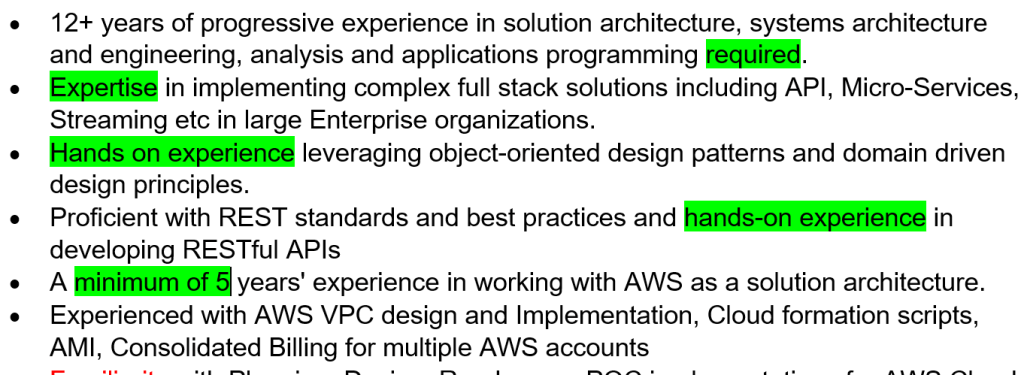
Mandatory skills
Mandatory skills are listed with hard words – like “Required“, “experienced“, “Minimum“, “Must have“, etc. They are the minimal requirements that if you don’t have it, chances are that you won’t get an interview. Your resume must include reference to these skills to get to the interview unless your resume is super strong and have ample amount of other skills.
Optional skills
Actually, by looking at WEAK key words, like “Should“, “Familiar” and “Understanding“- you can identify optional skills. This means it would be an asset if you have this. It’s not mandatory, but the more you have, it’ll set you apart from everyone else. Other ways of identifying optional skills is that they sometimes even tell you. Words like “having xxx would be a benefit“.

Soft Skills
Soft skills are what they want form the individual. They want you to demonstrate this type of behavior. This is how the team operates, and they want someone to fit into the team with that attitude or style. If everyone loves Pizza, but you don’t eat it – you won’t fit into that team. That’s what they’re trying to tell you with the soft skills section – also, if you demonstrate these soft skills well, you will fit into the team.

Question 3 – How to use a Skills Skeleton to apply to your resume template?
The video goes into actually applying your skills into a resume to apply for that specific job. Remember, it’s not about using 1 resume for all jobs, but to use one customized resume specifically for that one job. This means you’re reading the job posting, know what it wants, and ensuring you’re covering the “Soft Skills” and the “Mandatory” skills of the job posting.
So we’ve seen before on the job posting, that you need strong communication skills, ability to pay attention to detail, collaborate (or working in teams), and be a self starter. So most of you will go with the following items in your resume:
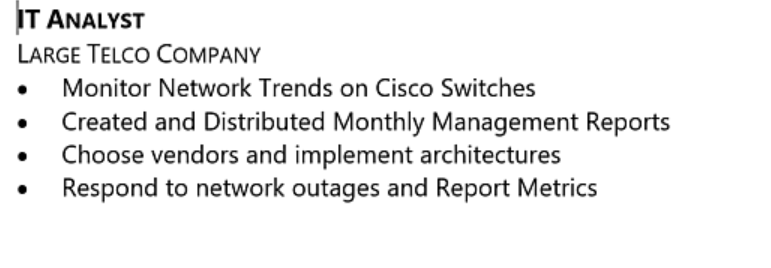
The problem with this experience is that it’s generic and doesn’t show anything that’s useful. It just tells me you worked someone where.
Here is my “Skills Skeleton” that we covered in my previous videos/posts. It has buckets to talk about the job experience, but also includes buckets of how I demonstrated different skills.
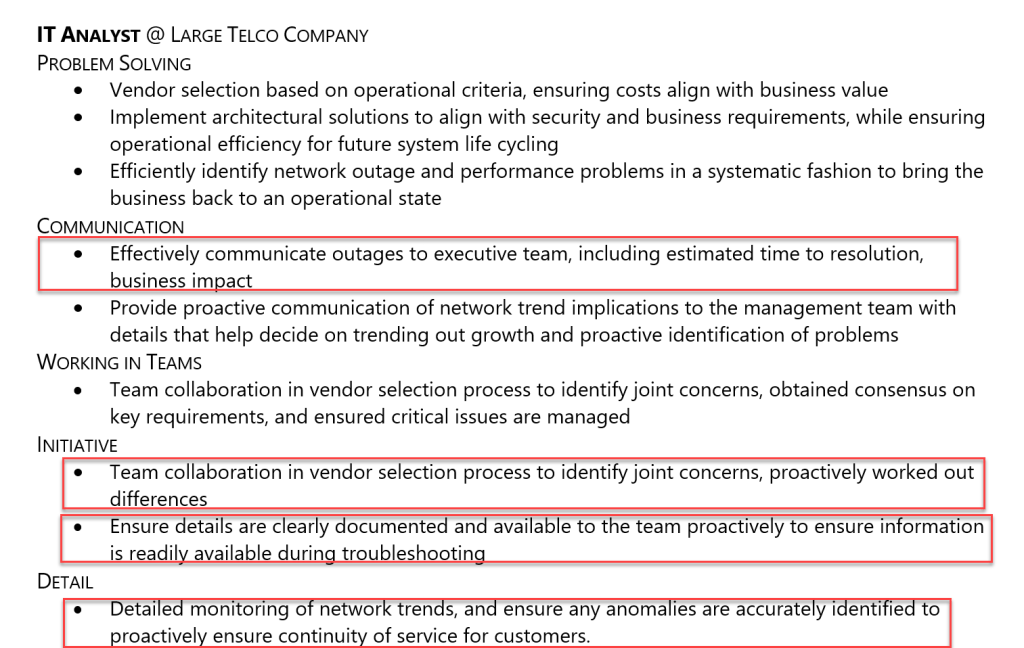
To fill out my job experience, I would copy points from here to the parts that hit the requirements of the job. Reminder, these include strong communication skills, ability to pay attention to detail, collaborate (or working in teams), and be a self starter. So here is the final outcome that I’m putting in my resume:

As you can see, by reading this section, the hiring manager sees how you’re very skilled to do the things that he/she needs filled in that role. This will guarantee you that interview position if you position yourself this way.
1 Bit of Advice
Remember what the job listing is about. A company is looking to hire someone to do a job. If you don’t show any experience in doing that job, you won’t be asked for an interview. They aren’t here to train a random person into a role. At the end, your resume should have 3 checks:
- Review all Mandatory skills – if you don’t have those, make sure you show in the resume you have an active course to learn it. Complete it by the interview.
- Try to show a lot of “Optional Skills required” in your job experience
- Demonstrate that your experience reflects the “job skills required” and “soft skills required” from the job posting.
Your life would be a lot of easier if you make sure you create that skills skeleton we talked about and consistently add to it with your new skills. Add all the skills of each course you take that you know well, and keep immersed in new technology. Good luck out there!
 ITJob.Coach