


I’m still surprised with all the tools out there, how many resumes still have so many mistakes! Can this be the reason why you’re not getting interviews? Does your resume fall into these problems?
Let’s go over the top problems with IT resumes that I’ve seen when I receive hundreds of resumes for my job openings. The following are reasons I’ve thrown away resumes in the past.
1) Initial View
They say executives make up a decision whether to do business with you on their first 15 seconds of meeting you. The same goes for when you go to a webpage, go buy a book, or click on a video to watch. Attention spans are getting less and less, as Microsoft has done their own study and shows our attention span is about 8 seconds – less than that of a goldfish.
Please put proper structure in your resume. Format thigs, put things in proper boxes. Don’t go from double space to single space, stick to consistency so it’s appealing to the eyes! Some small formatting errors can just destroy your chances in the company.
2) Basic Errors
Let’s assume you already capitalized proper technology, and gone through spell checks and grammar checks. If not, please do. There’s no reason that little red squiggly line for a misspelled word should show up on your resume.
The next step is to also have someone review it. Make sure someone who has a good English acumen review it. These types of issues can be easily avoided. Most hiring managers will find reasons to skip through your resume as they have too many to go through.
Did you know VMware has the first 2 letters capitalized? No? The hiring manager does! Don’t let this be a reason your resume is thrown out!
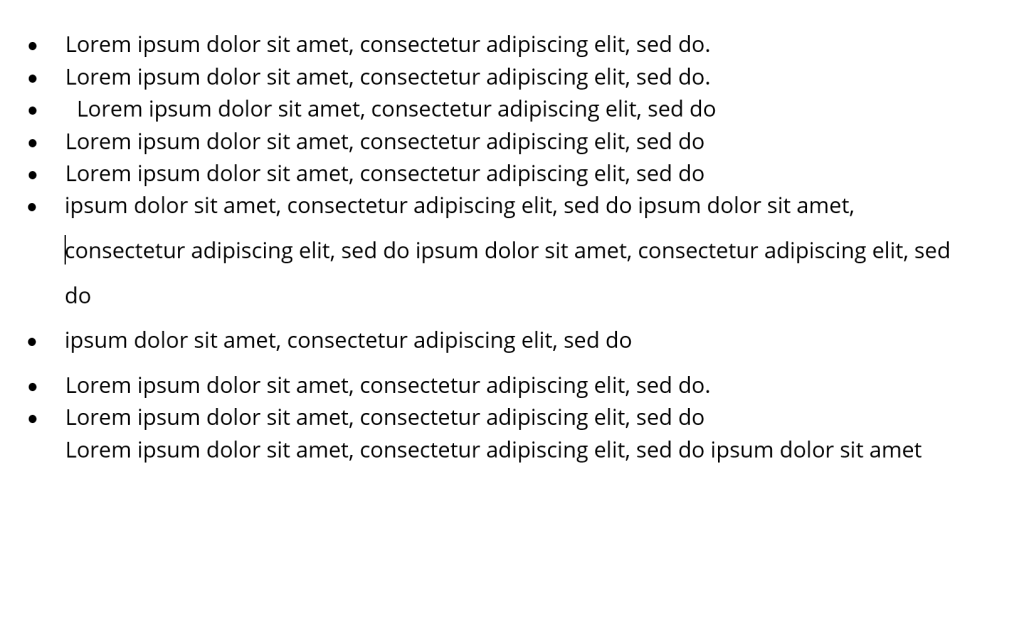
EXAMPLE OF FORMATTING MISTAKES – How many can you spot?
3) Tense And Consistency
I’ve seen resumes jump between font sizes, have periods and punctuation in only some sentences, jump from past tense to present tense throughout the resume. I’ve even seen spacing issues and line spacing that magically gets bigger and smaller within a pointed list. Please be consistent!
- If you’re going to use past tense, keep it in the whole resume. Although, present tense is typically more preferred.
- Please make sure if you’re going to use Periods at the end of one sentence, use Periods on every sentence.
- Maximum use 2 fonts – one for headers, and one for content. This follows the principals of good Web Design, and should be followed in your presentations also.
4) Putting Education too high
I get it! Some of us are fresh off school and it’s been the last 3-5 years of our lives. We put it smack in the middle or near the top of our resume. However, remember that after a few years, you education is eclipsed by your work experience.
Nothing shouts out “Noob” or “Newbie” than someone listing their education first. Usually, you put that near the end with your certifications.
5) Wordy
Wordy is fine. However, most business documents we publish is all about simplification. When they teach presentation skills on slides, they tell you to reduce words. There’s advice that goes to reducing your words by 50%, and then try the exercise again once you’re done.
Another highly sought after skill is the ability to simplify complex subjects. For me, that’s a great goal that I personally work on everyday. This “Wordy” recommendation is my personal preference, however, I do suggest you read what you wrote. Remember the hiring manager going through hundreds of these documents. If you’re a great writer, by all means go crazy. If you’re average like me, I suggest the less words the better – Simplify!
6) Structure
Try to consolidate common facts in one area. Show organization. If you have skills, please ensure you put structure it nicely. Look at examples. How have they done it? Can you clean it up more?
7) Relevance
The most important thing after the initial feeling your resume gives off, is the relevance. After passing the “sniff” test – the first feeling your structure and presence of the resume gives off, they start to carefully analyze the resume. Please make sure that the resume has relevance to the job you’re applying for!
My 1 Bit of Advice
Think about what the hiring manager is doing. He/she has to sort through hundreds of resumes. The tips above will increase your chances. I should know, I’ve definitely seen my fair share of thrown away resumes.
My other point to this precision is – you’re being interviewed to go into a job that’s keeping the company operational. If you can’t represent yourself well and structure yourself on 2 pieces of paper, how can they give you the keys to their IT shop? Would you give your kid over to a babysitter who has tons of mistakes on her resume?
Surprising, when I polled other leaders in North America, I was informed that the average time looking through a stack of resumes range from 10 seconds to 2 minutes for their first round reviews. Do yourself a favor! Increase those percentages!
 ITJob.Coach